

How Are Gutters Replaced Above a Covered Deck?
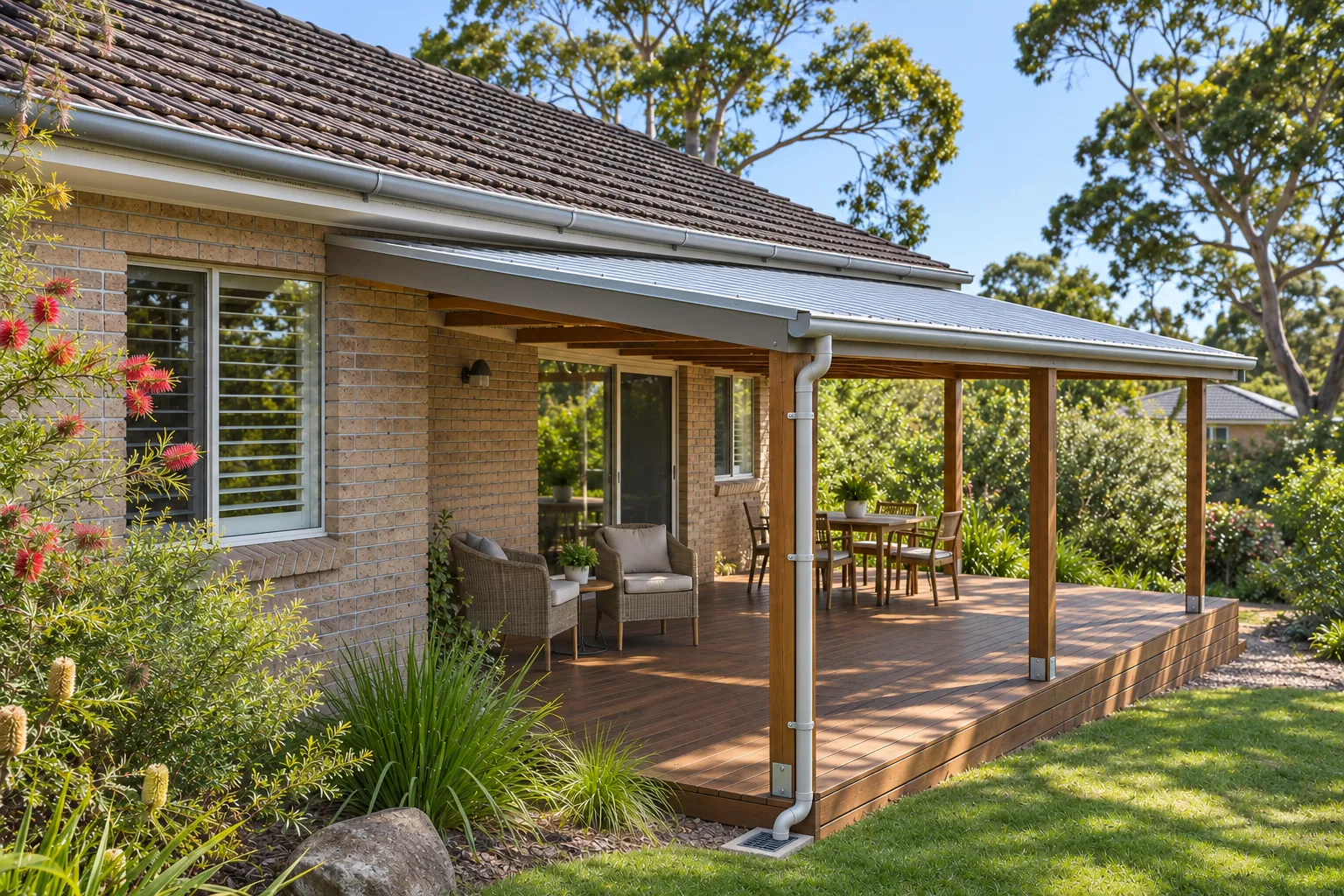
A covered deck can make a straightforward-looking gutter replacement surprisingly complicated. You might be able to see the existing gutter clearly from below, yet the covering can block the space an installer needs to reach its brackets, remove old sections and position new lengths. Central Coast Guttering can assess these access challenges and determine what the replacement work may involve before installation begins.
If you are comparing quotes, understand what an installer must assess before confirming that your covering can stay untouched. Clearance, roof connections, safe access and material handling can all influence the proposed work. Knowing what to expect helps you compare quotes based on the actual requirements of your property, rather than simply looking at the final price.
Can I Leave My Deck Covering in Place?
Your deck covering may be able to remain in place during gutter replacement, but this depends on how it sits beneath or alongside the existing gutter. There needs to be enough room for the entire replacement process, not simply enough space to reach the gutter from one position.
An on-site assessment by a professional is the most reliable way to establish what can remain undisturbed. Photographs can help explain the arrangement, but they may not reveal concealed fixings, tight overlaps or the condition of supporting edges.
The Gap Between the Covering and the Gutter
The important measurement is not just the visible gap. An installer needs sufficient clearance to reach the gutter supports, release the existing gutter and manoeuvre its replacement into position. A narrow opening might allow inspection while still preventing tools or materials from moving through it.
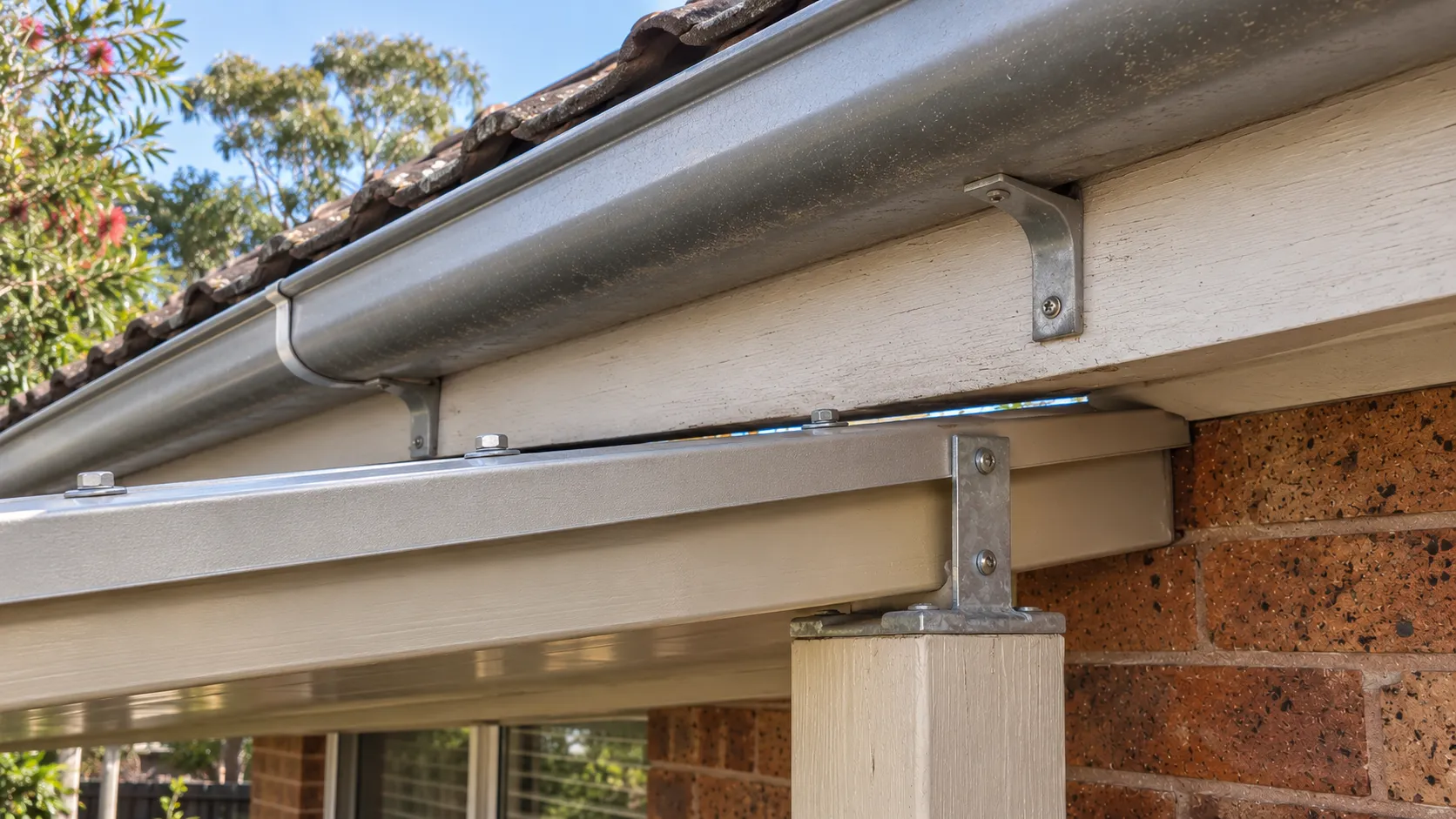
The new gutter also needs to sit at an appropriate height and alignment so water can travel towards the outlets. If the deck covering restricts that position, copying the existing arrangement without checking it could preserve an underlying problem. The assessment should establish whether the covering is simply close to the gutter or physically prevents a suitable installation.
Long gutter sections introduce another consideration. They need a workable route into position, with enough room to manoeuvre around corners and roof edges. A gap that looks adequate along the middle of the deck may become restrictive where the covering meets a wall or another structure. This is why gutter replacement above a covered deck cannot always be priced accurately based on gutter length alone.
Fixings and Roof Edges That May Restrict Removal
Some deck coverings finish below the house gutter with a clear separation. Others have flashings, overlapping sheets or structural connections that restrict access to the gutter's rear edge. The installer must establish which components are independent and which may require temporary disturbance.
If the house roof edge is also deteriorated, ask whether this affects the proposed gutter installation. Information about roof replacement work can help you frame that discussion, although a difficult gutter position does not automatically mean your roof needs replacing.
When comparing quotes for gutter replacement in Central Coast, ask what each supplier assumes about your existing deck covering. The quote should clarify whether the proposed work leaves it in place, includes any necessary disturbance or depends on further inspection. If a connection is concealed, ask how that uncertainty will be handled before additional work proceeds.
A promise that everything can remain untouched is less useful than an explanation based on the actual roof arrangement and installation requirements.
Safe Access Depends on More Than Ladder Reach
Reaching the gutter does not necessarily mean there is a suitable position from which to replace it. Installers need to handle materials, operate tools and move along the roof edge while managing risks to workers, occupants and the property below.
For difficult gutter access, a professional assessment considers the working position and the route to it. The deck covering, the structure beneath it and the available ground space all influence which access arrangements are appropriate.
A Deck Roof Is Not Automatically a Working Platform
A covering designed to shed rain is not necessarily designed to support people or installation equipment. Its appearance tells you little about its load capacity, the condition of its supports or whether individual sheets are fragile. Ageing materials and concealed deterioration can make assumptions particularly unreliable.
SafeWork NSW explains the risks of walking on fragile roof sheeting, including how plastic sheets can become brittle over time.
Even a metal covering should not be treated as a ready-made walkway. Sheet condition, support spacing and the underlying structure all matter. The material itself is only part of the assessment. If you are discussing the existing covering, information about metal roofing materials may help you describe it, but identifying a material does not establish that it is safe to stand on.
Depending on the property's layout, installers may consider alternative access arrangements. The option depends on the available ground space, working height and surrounding obstacles. A covering should never be used as a support or access platform unless its suitability has been properly established.
Leave decisions about working positions and access equipment to experts. Having previously stood on the covering does not prove that it can safely support installation work, which involves handling awkward lengths and applying forces that differ from simply inspecting an edge.
Ground Space and Obstacles Shape Access Options
Access also depends on what is beneath and besides the deck. The deck surface may have limitations that differ from firm ground, and its construction or condition can affect if it supports a proposed access arrangement. This needs professional assessment rather than an assumption based on how solid it feels underfoot.
Narrow side passages can restrict how equipment reaches the work area. Fixed seating, posts, balustrades and changes in ground level may reduce the available space further. An installer might have a clear view of the gutter while still lacking a practical position from which to remove and replace it.
The space needed for installation can extend beyond the gutter line. Materials must be brought in, turned and raised without relying on the covering for support. These handling routes need to be considered when selecting an access method when the deck is surrounded by walls, gardens or other structures.
How Will the Work Affect My Use of the Deck?
Expect some interruption to using the deck while gutter replacement takes place overhead. How much of the area is affected depends on the access arrangement, the route used to handle gutter lengths and whether any part of the covering needs to be disturbed.
Discuss your normal deck use before work begins, particularly if the deck connects frequently used doors or provides access to another part of your property. The question is not just how long installation takes, but which spaces will be unavailable during different stages.
Temporary Exclusion Areas Beneath the Work
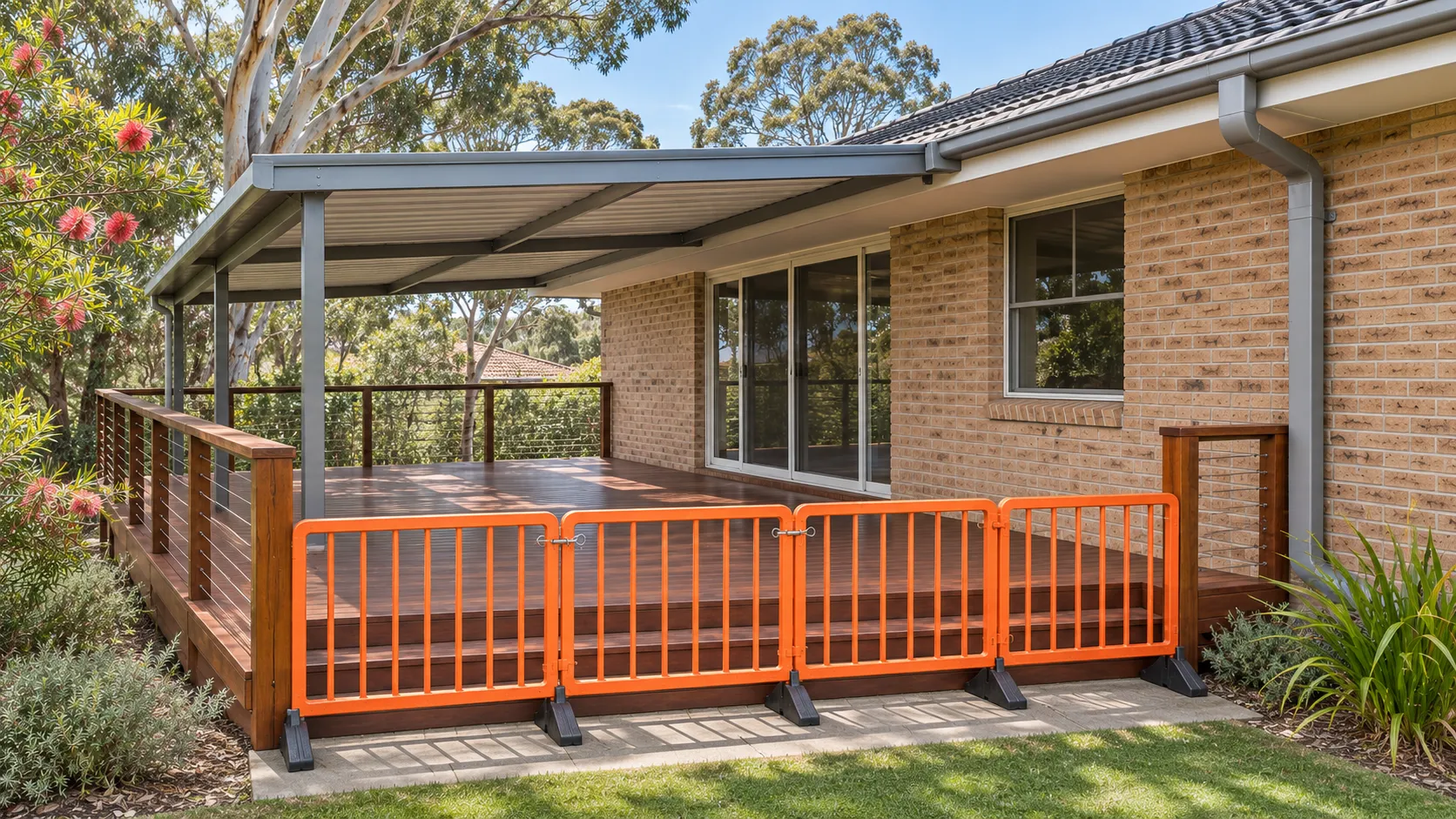
The area directly beneath overhead work may need to remain unused because tools, fixings and removed materials are being handled above it. A covering does not automatically make the space underneath suitable for occupation during installation. It may not provide reliable protection from dropped items and could itself be affected by the work.
The exclusion area may also include space besides the deck where materials are moved or access equipment is positioned. Its boundaries should reflect the work being performed rather than simply follow the edge of the covering. Ask the installer to explain which areas will be affected and how any changes will be communicated as the job progresses.
This matters if your deck connects frequently used doors or provides access to another part of the property. A route that appears separate from the gutter may still cross the material-handling area. Agreeing on temporary access arrangements beforehand is more practical than trying to pass through an active work zone during installation.
Protecting the Covering While Handling Gutter Lengths
Gutters are long, relatively awkward components to move through a restricted space. Removing an old section can be just as demanding as bringing in a new one, particularly where posts, roof edges or walls limit the available turning room.
Protecting the covering means considering how materials will be supported and moved without dragging them across its surface or using it as temporary storage. The installer should assess the covering's condition and explain any limitations that affect material handling. Existing wear or damage must be discussed so there is a shared understanding of its condition before work starts.
Restricted access can add time even when the total gutter length is modest. More controlled movements, limited working positions and the need to coordinate material handling can slow progress compared with an unobstructed roof edge. Additional access equipment, temporary removal of components or unexpected repairs may also affect the final cost.
Planning Gutter Replacement Around a Covered Deck
Replacing gutters without removing your deck covering may be possible, but the decision depends on the available clearance, roof connections, safe access and condition of the surrounding structure. A covering that appears to leave enough room from below may still restrict the tools, equipment and movements needed to complete the installation properly.
Before accepting a quote, make sure the supplier has assessed these conditions and explained whether the covering can remain untouched. Ask about access arrangements, temporary restrictions on deck use and how unexpected work or additional costs will be handled. Before hiring, you can also check your contractor’s licence through Service NSW to confirm its current status and the categories of work it covers.
Central Coast Guttering can check the requirements of your property and explain the practical considerations involved in replacing gutters above a covered deck. A clear assessment before work begins makes it easier to plan the installation, protect the existing structure and avoid unnecessary surprises.